
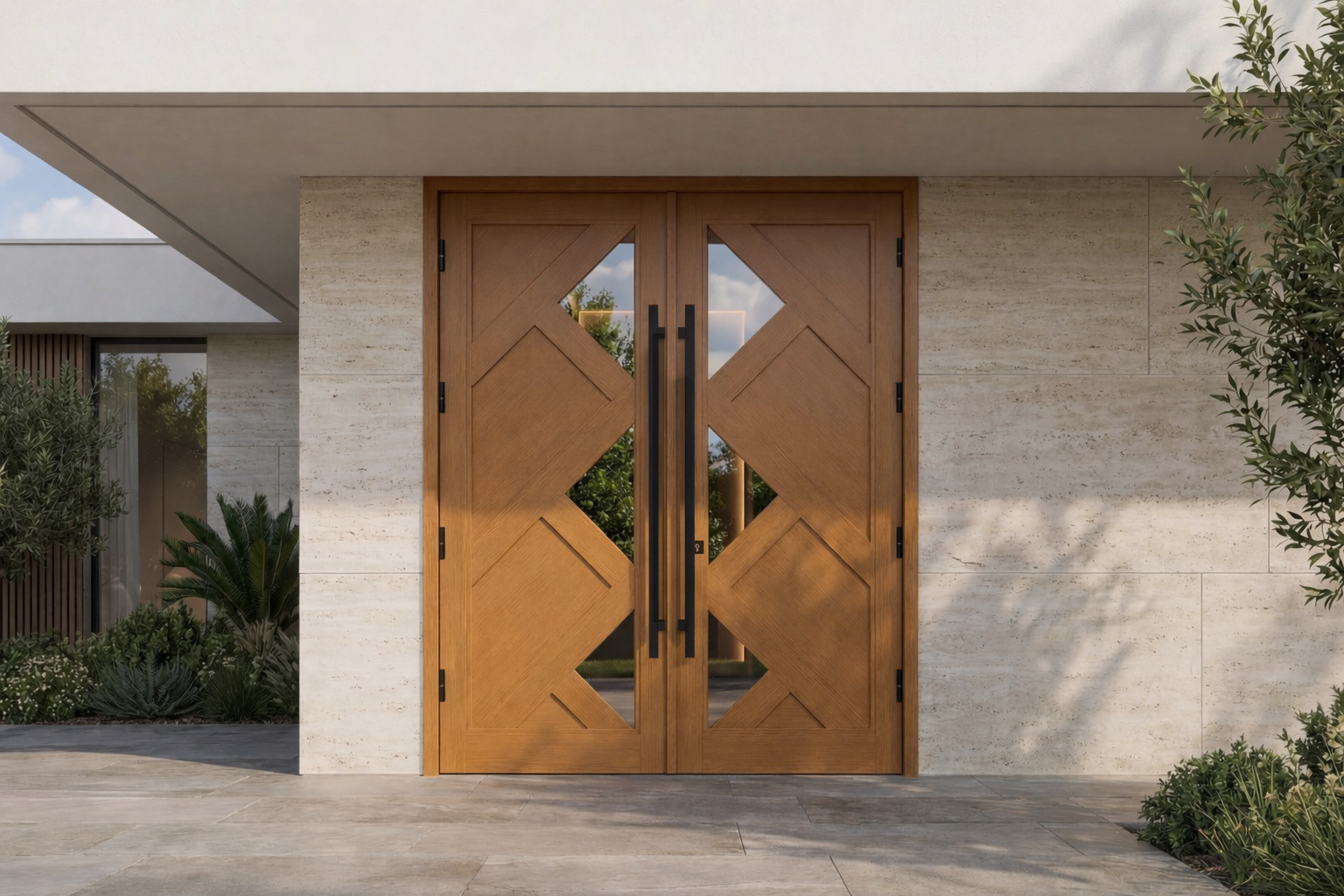
An entry door is more than just a barrier between the interior and exterior of a building. It is an important part of the façade and has a direct impact on security, thermal performance, everyday comfort, durability, and architectural appearance.
For this reason, aluminum entry doors and pivot door systems are increasingly being specified alongside traditional steel doors in luxury residences, contemporary homes, and high-end residential projects.
So, what are the key differences between aluminum exterior doors and steel doors? And why are aluminum entry doors becoming increasingly prominent in modern architectural projects?
What Is an Aluminum Entry Door?
Aluminum entry doors are exterior door systems in which the structural door leaf and frame are engineered using architectural aluminum profiles.
Modern aluminum door systems go far beyond a simple metal frame. Thermally broken profiles, insulated infill materials, multipoint locking systems, high-performance weather seals, and a wide range of finish options come together to create a complete, high-performance entry door system.
Because aluminum offers exceptional design flexibility, it can be used for everything from conventional hinged entry doors to oversized architectural pivot doors.
What Is a Pivot Door?
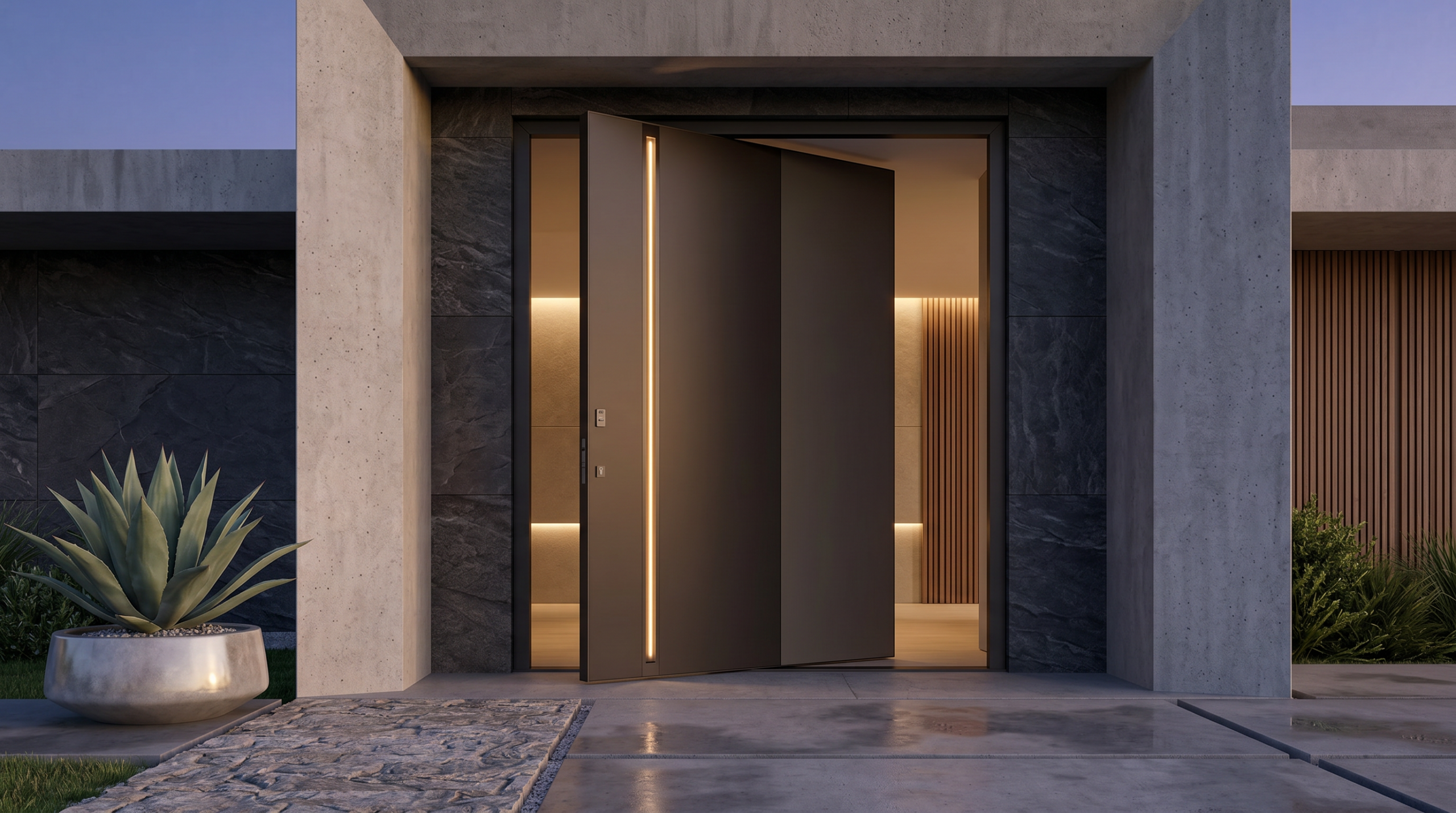
Unlike traditional doors that operate solely on hinges located along one side of the door leaf, pivot doors rotate around a pivot mechanism positioned at the top and bottom of the door.
This system makes it possible to design wider and taller entry doors, which is why pivot doors have become a defining architectural feature in contemporary luxury residential design.
When oversized door panels are combined with concealed hardware and clean, uninterrupted surfaces, pivot doors can create a bold, monolithic appearance at the entrance.
Aluminum is particularly well suited to large pivot door applications because it provides high structural performance while remaining relatively lightweight.
Key Differences Between Aluminum and Steel Entry Doors
Steel doors have been widely used for residential entrances for decades. Today, however, architectural expectations extend far beyond security alone.
Modern entry doors are also expected to integrate seamlessly with the façade, accommodate larger dimensions, maintain their finish over time, provide strong thermal performance, and work with advanced locking and automation technologies.
This is where aluminum systems offer several important advantages.
1. Aluminum Is Lightweight While Offering Strong Structural Performance
One of aluminum’s key advantages is its high strength-to-weight ratio.
Steel is a denser material and can result in heavier assemblies when used for doors of comparable size. With oversized entry doors, increased door weight can place additional loads on hinges, pivot mechanisms, and other hardware components.
Aluminum profiles make it possible to design large door leaves with significantly lower material weight.
This becomes particularly valuable for oversized entry doors and architectural pivot doors.
2. Aluminum Provides Greater Design Freedom for Pivot Doors
Modern entry doors are no longer limited to standard residential dimensions.
Floor-to-ceiling doors, oversized pivot panels, and doors designed to visually integrate with the surrounding façade are becoming increasingly common in contemporary architecture.
Aluminum extrusion technology allows specialized profile geometries to be developed so that structural, aesthetic, thermal, and functional requirements can be addressed within one integrated door system.
For this reason, aluminum is particularly well suited for:
- Oversized pivot doors
- Minimalist entry doors
- Concealed-hinge doors
- Glazed entry door systems
- Large residential entrances
- Contemporary façade designs
3. Aluminum Has a Natural Advantage in Corrosion Resistance
Steel surfaces can be vulnerable to corrosion when their protective coating is damaged or when they are not adequately protected from exterior conditions.
Aluminum naturally develops a protective oxide layer on its surface. Its exterior durability can be further enhanced through proper surface preparation and finishing processes such as powder coating or anodizing.
This is especially important in:
- Coastal environments
- High-humidity regions
- Façades exposed to heavy rain and intense sunlight
- Projects exposed to salt-laden marine air
A high-quality aluminum entry door with the proper surface treatment can be designed to maintain its appearance and performance for many years.
4. Thermally Broken Aluminum Systems Can Deliver High Thermal Performance
In older generations of aluminum framing, the metal’s thermal conductivity was often considered a disadvantage.
Modern thermally broken aluminum systems address this issue by separating the interior and exterior aluminum sections with low-conductivity thermal barriers.
When combined with insulated door panels, high-performance seals, and properly specified glazing, aluminum entry door systems can achieve excellent levels of thermal performance.
For this reason, a modern aluminum entry door should not be evaluated based on the aluminum material alone. Overall performance depends on the engineering of the complete door system.
5. Slim Profiles and a Modern Architectural Aesthetic
One of the main reasons architects specify aluminum is its design versatility.
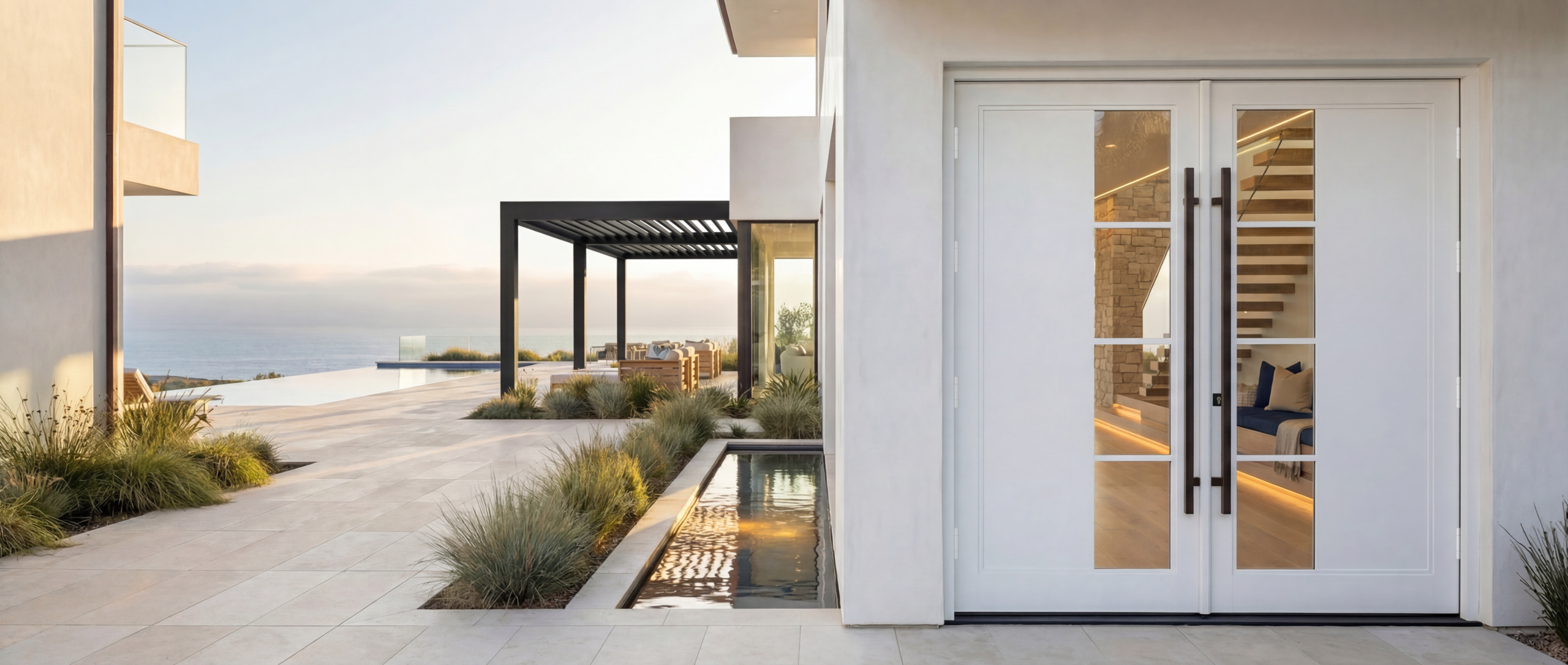
Steel door construction and cladding methods can sometimes result in thicker or more traditional detailing, while aluminum systems can achieve cleaner lines, more precise geometry, and a more minimal aesthetic.
Aluminum entry doors are particularly well suited to architectural features such as:
- Large, uninterrupted surfaces
- Concealed details
- Slim frames
- Oversized door dimensions
- Minimalist pull handles
- Colors and finishes coordinated with the façade
As a result, the entry door is no longer viewed as simply a functional building component. It has become an important element of the building’s overall architectural identity.
Color and Finish Options for Aluminum Entry Doors
Another major advantage of aluminum is the wide range of available finish options.
Powder coating allows aluminum doors to be produced in an extensive range of colors. Matte, gloss, textured, and metallic finishes are available, along with specialty finishes that replicate the appearance of natural wood.
This makes it possible to coordinate the entry door with window systems, sliding doors, façade materials, and other architectural elements.
Using a consistent color and finish across windows, sliding systems, and entry doors can help create a more cohesive architectural design throughout the project.
Which Is More Secure: Aluminum or Steel?
The assumption that steel doors are inherently secure while aluminum doors are primarily aesthetic no longer reflects the capabilities of modern door engineering.
Door security is not determined solely by the type of metal used.
Security performance depends on several factors, including:
- Profile geometry and structural design
- Locking system
- Hinge or pivot mechanism
- Door leaf construction
- Connection and anchoring points
- Glass or panel configuration
Modern aluminum entry door systems can be engineered with multipoint locking systems, reinforced profiles, and advanced hardware to meet demanding residential security requirements.
For this reason, the engineering of the complete door system is more important than evaluating the base material alone.
Why Is Aluminum Ideal for Oversized Entry Doors?
In contemporary luxury residential architecture, entry doors exceeding 8 feet in height are increasingly common, with some designs reaching 10 feet or more.
As door dimensions increase, weight, panel stability, hardware loads, and ease of operation become increasingly important considerations.
Aluminum’s favorable strength-to-weight ratio provides a significant advantage for these large openings.
When combined with properly engineered pivot mechanisms, aluminum can make it possible to create large door panels that remain visually refined, structurally stable, and comfortable to operate.
For this reason, aluminum pivot entry doors are becoming an increasingly popular choice for luxury residential projects.
Maintenance and Long-Term Durability
Another important advantage of aluminum in exterior applications is its relatively low maintenance requirement.
An aluminum door with the appropriate surface treatment typically requires little more than routine cleaning and periodic inspection of locks, seals, hinges, and other mechanical hardware.
With steel doors, damage to paint or protective coatings may require attention to prevent corrosion from developing.
In regions with frequent rainfall, high humidity, or salt-laden coastal air, aluminum can therefore offer a significant long-term advantage.
Aluminum and Sustainability
Aluminum is a material that can be recycled repeatedly.
As energy efficiency, responsible material use, and circularity become increasingly important within the building industry, recyclable aluminum represents an important material choice for architectural systems.
Combined with its long service life, aluminum door systems can also support the sustainability goals of contemporary building design.
Conclusion: Why Is Aluminum Becoming a Leading Choice for Modern Entry Doors?
Steel doors remain a practical solution for many residential applications. However, expectations for modern entry doors have evolved.
Today’s entry door must do more than provide security. It should also accommodate large dimensions, contribute to thermal performance, withstand exterior weather conditions, and complement the architectural language of the building.
Aluminum entry doors offer a compelling solution for contemporary architecture thanks to their:
- Favorable strength-to-weight ratio
- Strong structural performance
- Corrosion resistance
- Design flexibility
- Wide range of colors and finishes
- Suitability for oversized pivot door applications
Particularly in luxury homes and high-end residential projects, aluminum pivot doors can transform the entrance from a simple point of access into a defining architectural feature.
A properly engineered aluminum entry door brings aesthetics and performance together within a single architectural system.